I like to think of classical music as a style. During the explosion of its growth somewhere around the Renaissance, it encompassed full orchestras, small groups (string quartets, chamber groups), church music including great organ works and choral works, and solo performances on percussion instruments such as the harpsichord and clavichord. With this breadth of style, it is not too much of a jump to say that instrumental folk and mountain music, with and without singing (think arias and choruses and transition to solo singers and small groups), is a form or outgrowth of classical music. Let's face it, it is tough to find a full orchestra in the Appalachian mountains in the late 1700's. Likewise, as I noted in a previous post, much of rock-and-roll finds its roots in classical music (as does big band of the middle of the last century). Of course, classical as defined above, being part of the Renaissance and flanking either side of it, could easily be traced back to what is classified as ancient music - recent ancient such as the 13th and 14th century and really ancient as in Greece, Rome, China, Native Indians.
So, where is the new classical, though? I am not too much of a fan of some of the "NEW" classical. These are the works of some composers who want to challenge the rules of tone and harmony and rhythm. They generally sound like the output of a cat running across a keyboard or a mouse getting stuck amongst the piano strings. They generally inspire tension, which is not the reason I choose to listen to any music.
If not these works, then what? Where are the great orchestra works of modern times?
I would say that the answer lies in movies. After the 1970's, and the fear that electronic music a la Robert Moog would replace the human orchestra, it seems that great movie producers/directors learned that truly orchestral music could set the mood for a movie or different points in movies. This is truly an art form that challenges composers and has given us a wide variety of musical scores, enriching both the genre and the aural palate. A few examples follow:
This first example embraces the timbral range of the music, evoking the vision of the start of a new day or a new exploration. Gradually becoming more bright and complex, the vision is as if you are bursting into an opening of a new experience and culminating with the choral voices that could be the sounds of angels ... you will know the movie well.
Example 1
This next piece is the perfect example of the juxtaposition of two moods - serenity and the explosion of a sudden forceful event, complete with a tensional crossover ... (note the meaning of the choral insertion in the context of the film)
Example 2
Finally, a piece that does not match the mood of the title of the film, but one that perfectly brings you into a central tenet of a recurring theme in the movie ...
Example 3
This last one is a particularly useful one for me to listen to when I am thinking through the interpretation and meaning of a large swath of data that, at least at first, don't seem to tell a story ...
So, I think the new classical, as referenced to orchestral works, lies in the movies.
Saturday, January 31, 2015

Sunday, January 25, 2015
Rock and Roll Isn't so New
My parents would not have believed it. Their followers are probably not aware of it. The artists probably don't boast about it, but many rock and roll musicians were classically trained; Paul McCartney, Billy Joel, Ian Anderson, and Keith Emerson to name a few.
Add to that the fact that plagiarism is widely accepted in the musical world (interesting to me that with the variables of around 100 notes, length of composition, combinations of harmony and so on, that composers widely "use" the work of others) and you have a strong influence of classical music on popular songs.
A bit of digging uncovers the following, which is only a partial listing of many more examples:
1960's
Elvis Presley: It's Now or Never (O Solo Mio)
The Ventures: Rap City (Brahms' Hungarian Dance in G Minor)
Procol Harum: A Whiter Shade of Pale (Bach's Air on a G String and Sleeper's Wake)
John Lennon: Because (Beethoven's Moonlight Sonata)
Deep Purple: Prelude B - I'm So Glad (Rimsy-Korsakov's Shaharazade)
The Doors: Abinoni's Adagio in G Minor (Abinoni's Adagio in G Minor)
1970's
Emerson Lake and Palmer:
Knife Edge (Leos Janacek's Sinfonietta) (
Abbadon's Bolero (Ravel's Bolero)
Pictures at an Exhibition (Mussorgsky's Pictures at an Exhibition)
Tocatta (Ginastera's First Piano Concerto, 4th Movement)
(MANY MORE)
Eric Carmen: All By Myself (Rachmaninoff's Piano Concerto No. 2)
John Denver: Annie's Song (Tchaikovsky's 5th Symphony, 2nd Movement)
Neil Diamond: Song Sung Blue (Mozart's Piano Concerto no. 21, 2nd Movement)
Barry Manilow: Could It Be Magic (Chopin Prelude in C Minor)
Yes: Cans and Brahms (Brahms' Symphony no. 4, 3rd Movement)
Beach Boys: Lady Linda (Bach's Jesu Joy of Man's Desiring)
1980's
Bad Manners: Can Can (Offenbach's Orpheus in the Underworld)
Billy Joel:
This Night (Beethoven's Pathetique Sonata)
And So It Goes (Charles Hubert Parry's Jerusalem)
Leningrad (Brahms' Waldesnacht, du Wunderkuehle)
Sting: Russians (Prokofiev's Lieutenant Kije Suite, Opus 60)
1990's
Enigma: Mea Culpa (Gregorian Chant Kyrie Eleison)
Rob Dougan: Clubbed to Death (Edward Elgar's Enigma Variations)
Santana/Dave Matthews: Love of My Life (Brahms' Symphony no 3, 3rd Movement)
Now for one comparative example that is, note for note, the same for the greats: Emerson, Lake and Palmer and Aaron Copland:
Hoedown (Keith Emerson, Greg Lake and Carl Palmer)
Hoedown (Aaron Copland
So, it would seem that the two genre's are not so far apart!
Add to that the fact that plagiarism is widely accepted in the musical world (interesting to me that with the variables of around 100 notes, length of composition, combinations of harmony and so on, that composers widely "use" the work of others) and you have a strong influence of classical music on popular songs.
A bit of digging uncovers the following, which is only a partial listing of many more examples:
1960's
Elvis Presley: It's Now or Never (O Solo Mio)
The Ventures: Rap City (Brahms' Hungarian Dance in G Minor)
Procol Harum: A Whiter Shade of Pale (Bach's Air on a G String and Sleeper's Wake)
John Lennon: Because (Beethoven's Moonlight Sonata)
Deep Purple: Prelude B - I'm So Glad (Rimsy-Korsakov's Shaharazade)
The Doors: Abinoni's Adagio in G Minor (Abinoni's Adagio in G Minor)
1970's
Emerson Lake and Palmer:
Knife Edge (Leos Janacek's Sinfonietta) (
Abbadon's Bolero (Ravel's Bolero)
Pictures at an Exhibition (Mussorgsky's Pictures at an Exhibition)
Tocatta (Ginastera's First Piano Concerto, 4th Movement)
(MANY MORE)
Eric Carmen: All By Myself (Rachmaninoff's Piano Concerto No. 2)
John Denver: Annie's Song (Tchaikovsky's 5th Symphony, 2nd Movement)
Neil Diamond: Song Sung Blue (Mozart's Piano Concerto no. 21, 2nd Movement)
Barry Manilow: Could It Be Magic (Chopin Prelude in C Minor)
Yes: Cans and Brahms (Brahms' Symphony no. 4, 3rd Movement)
Beach Boys: Lady Linda (Bach's Jesu Joy of Man's Desiring)
1980's
Bad Manners: Can Can (Offenbach's Orpheus in the Underworld)
Billy Joel:
This Night (Beethoven's Pathetique Sonata)
And So It Goes (Charles Hubert Parry's Jerusalem)
Leningrad (Brahms' Waldesnacht, du Wunderkuehle)
Sting: Russians (Prokofiev's Lieutenant Kije Suite, Opus 60)
1990's
Enigma: Mea Culpa (Gregorian Chant Kyrie Eleison)
Rob Dougan: Clubbed to Death (Edward Elgar's Enigma Variations)
Santana/Dave Matthews: Love of My Life (Brahms' Symphony no 3, 3rd Movement)
Now for one comparative example that is, note for note, the same for the greats: Emerson, Lake and Palmer and Aaron Copland:
Hoedown (Keith Emerson, Greg Lake and Carl Palmer)
Hoedown (Aaron Copland
So, it would seem that the two genre's are not so far apart!
Friday, January 23, 2015
The Genius of Composition - Mozart
I have always been fascinated by the creative process. It amazes me that there are people who can have sound in their head and commit it to paper for musicians to read and play. The movie Amadeus is the fictional story of the relationship between two composers, Wolfgang Amadeus Mozart and Antonio Salieri. The whole movie is awesome. In one part, we get a peek into the compositional process as Mozart dictates a score to Salieri ...
Confutatis from Mozart's Requiem
Starting with the voices and adding in layer after layer of instrumentation and having it all work together ... simply amazing. I understand that this is a movie, but it is likely that the musical director, who happened to be Neville Marriner, provided a lot of insight.
The Confutatis is the 5th element of the Requiem. The words are:
Confutatis maledictis, flammis acribus addictis, voca me cum benedictus.
Oro supplex et acclinis, cor contritum quasi cinis, gere curam mei finis.
The English translation (courtesy of Memphis City Schools):
When the accused are confounded, and doomed to flames of woe, call me among the blessed.
I kneel with submissive heart, my contrition is like ashes, help me in my final condition.
The full version of this part of the Requiem from Marriner:
Confutatis from Mozart's Requiem - Neville Marriner
The range of emotion, sound and interplay of instruments and the incredible harmonizations are simply beautiful.
Confutatis from Mozart's Requiem
Starting with the voices and adding in layer after layer of instrumentation and having it all work together ... simply amazing. I understand that this is a movie, but it is likely that the musical director, who happened to be Neville Marriner, provided a lot of insight.
The Confutatis is the 5th element of the Requiem. The words are:
Confutatis maledictis, flammis acribus addictis, voca me cum benedictus.
Oro supplex et acclinis, cor contritum quasi cinis, gere curam mei finis.
The English translation (courtesy of Memphis City Schools):
When the accused are confounded, and doomed to flames of woe, call me among the blessed.
I kneel with submissive heart, my contrition is like ashes, help me in my final condition.
The full version of this part of the Requiem from Marriner:
Confutatis from Mozart's Requiem - Neville Marriner
The range of emotion, sound and interplay of instruments and the incredible harmonizations are simply beautiful.
Thursday, January 22, 2015
Walter (Wendy) Carlos and the Moog Synthesizer
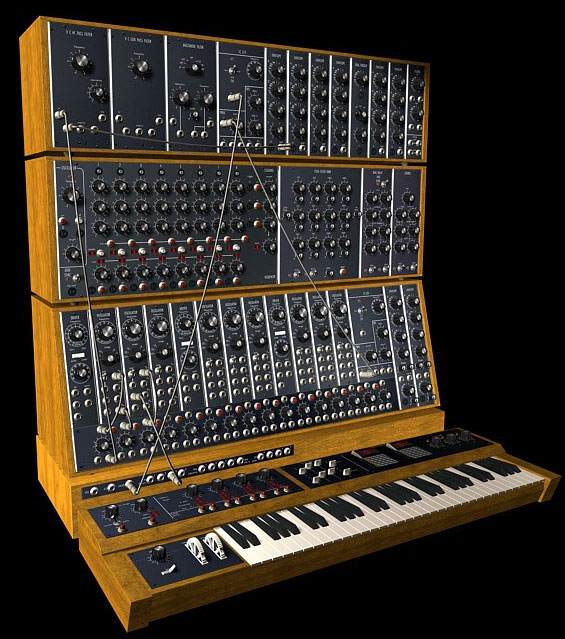
Carlos then built an 8 track tape system and laid down individual tones mixes that represented individual "instruments". The use of 8 tracks allowed him to develop "orchestrations. It was an incredibly slow process, yet he insisted that every note be true to the original classical scores.
He had three purely classical albums: "Switched on Bach", "The Well Tempered Synthesizer", and "Switched on Bach II".
Now, back to specific classical music. The "Switched on Bach" album had, as its first track, Sinfonia to Cantata No. 29. There followed a number of other songs, but the first suffices to show how difficult it must have been to play one note at a time and get the timing right, rewind the tape, go to the second track, do the same and so on. Nonetheless, the output was great and so I began to become a fan of Bach. Here are two versions of the Sinfonia:
Synthesizer version by Wendy Carlos (This is actually a link to the entire side 1 of the album)
Orchestral version as originally intended
Pipe Organ version as I heard it in church
I find that listening to different versions of the same song really promotes an understanding of the different moods that you can get for the music as the different interpretations of artists and directors.
Tuesday, December 23, 2014
Looney Tunes as a Music Teacher
The guys of Termite Terrace (Warner Bros ... Termite Terrace) who wrote and animated all of the Bugs Bunny cartoons also managed to keep a full time orchestra busy as well. I heard some of my first classical pieces watching these cartoons. One examples is What's Opera, Doc, which was my introduction to Richard Wagner. Not a fan of opera (I can't understand most of the time because of the Italian lyrics), nonetheless, this cartoon (snippet here: Partial "What's Opera, Doc") was based largely on Wagner's opera and included the Ride of the Valkyries renamed in the cartoon as "Kill the Wabbit".
Another classic, The Rabbit of Seville, takes on Mozart with a spin on the Barber of Seville. They also manage to squeeze the Marriage of Figaro into this 7-minute wacky feature.
Bugs was also known to play the great Leopold Stokowski as he puts his snobby neighbor and professional baritone through the loops on stage until it comes crashing down in Long Haired Hare.
You can tell my classical upbringing was largely spurred by passive intake of information from various radio and tv sources. In my next blog, we will venture into the real reason that I got interested in all of this ...
Another classic, The Rabbit of Seville, takes on Mozart with a spin on the Barber of Seville. They also manage to squeeze the Marriage of Figaro into this 7-minute wacky feature.
Bugs was also known to play the great Leopold Stokowski as he puts his snobby neighbor and professional baritone through the loops on stage until it comes crashing down in Long Haired Hare.
You can tell my classical upbringing was largely spurred by passive intake of information from various radio and tv sources. In my next blog, we will venture into the real reason that I got interested in all of this ...
Saturday, December 20, 2014
Classical Music and NBC News
When I was much younger - in my middle teens, the NBC nightly news (Chet Huntley and David Brinkley) always signed off with a piece of classical music. It was very powerful at the end of the news (remembering that there were only three news outlets in the late 60's and early 70's). I asked a neighbor who was particularly musically talented if they knew the name of the piece. No luck. I stumbled onto the piece in my first year at college .... Beethoven's 9th symphony, movement number two ( Beethoven's 9th Symphony, Mvmt 2 ). This piece also played prominently in Stanly Kubrik's movie "A Clockwork Orange"
Friday, December 19, 2014
Sir Neville Marriner
I have always had some deep interest in classical music. I can't really say why - maybe it is the intricate mathematics of the overlay of sound from a variety of instruments, maybe it is the physics of music, maybe it is the immense talent it takes to write something for so many instruments.
Now, I am not a classical music expert. However, if I have a chance, I will take the Neville Marriner version of a classical piece over any one else. Marriner spent much of his career leading "The Academy of Saint Martin in the Fields".
It was Marriner's version of Handel's Messiah ( Worthy Is the Lamb & Amen ) that I heard on WHRO radio (Norfolk, VA, USA) in the 80's that got me hooked on that classical masterpiece. Marriner was also the music director of the movie Ammadeus and insisted that all of the Mozart pieces be done as intended, not pieced together to meet the demand of some movie schedule. So, I bought the soundtrack ... it is fabulous. One piece, near the end of the movie, Mass for the Dead, was set to show the composition process that Mozart and Salieri used to write such moving music. The scene then cuts to Mozart's death while the entire score is played ( confutatis ). The depth of sound was amazing.
I borrowed another version of Mozart's mass from the library. It was some eastern European symphony (Prague or Budapest, or something like that). While it was quite nice, it just did not have the richness and power of Marriner's version.
In a Marriner-directed piece, trumpets bark, kettle drums roll like thunder, strings glide together and almost sing, woodwinds breathe.
Now, I am not a classical music expert. However, if I have a chance, I will take the Neville Marriner version of a classical piece over any one else. Marriner spent much of his career leading "The Academy of Saint Martin in the Fields".
It was Marriner's version of Handel's Messiah ( Worthy Is the Lamb & Amen ) that I heard on WHRO radio (Norfolk, VA, USA) in the 80's that got me hooked on that classical masterpiece. Marriner was also the music director of the movie Ammadeus and insisted that all of the Mozart pieces be done as intended, not pieced together to meet the demand of some movie schedule. So, I bought the soundtrack ... it is fabulous. One piece, near the end of the movie, Mass for the Dead, was set to show the composition process that Mozart and Salieri used to write such moving music. The scene then cuts to Mozart's death while the entire score is played ( confutatis ). The depth of sound was amazing.
I borrowed another version of Mozart's mass from the library. It was some eastern European symphony (Prague or Budapest, or something like that). While it was quite nice, it just did not have the richness and power of Marriner's version.
In a Marriner-directed piece, trumpets bark, kettle drums roll like thunder, strings glide together and almost sing, woodwinds breathe.
Subscribe to:
Posts (Atom)